
Firm knowledge you can verify
Keystone
- Role
- Self-directed. Product direction, experience design, and prototype build.
- Description
- A knowledge interface that answers from approved records, exposes its evidence, and makes missing knowledge actionable.
- Audience
- AEC staff, practice leaders, and knowledge owners
- Stage
- Interactive prototype using synthetic firm, project, source, and staff records.
System reframe
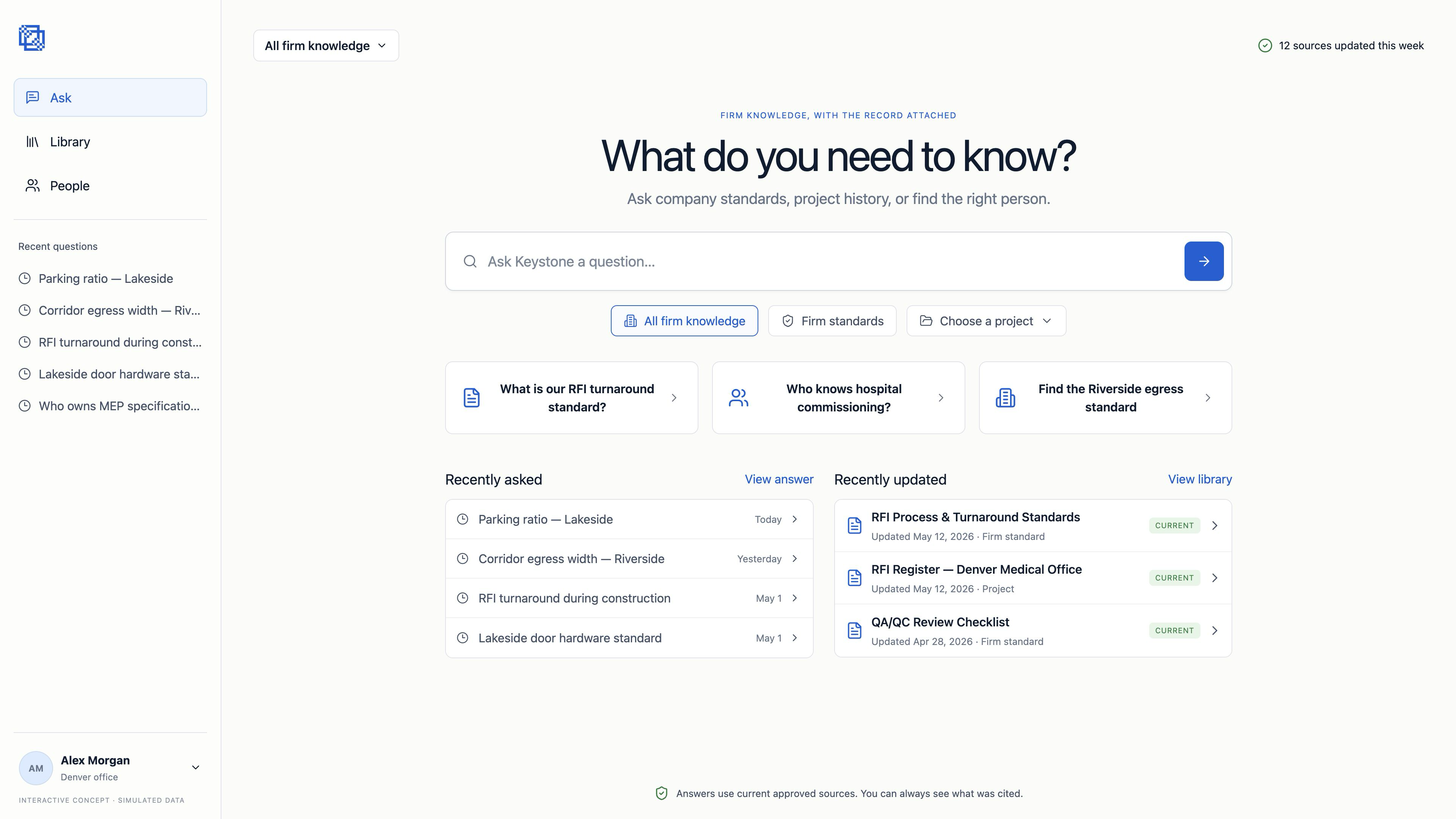
The product was not a chatbot over a document pile.
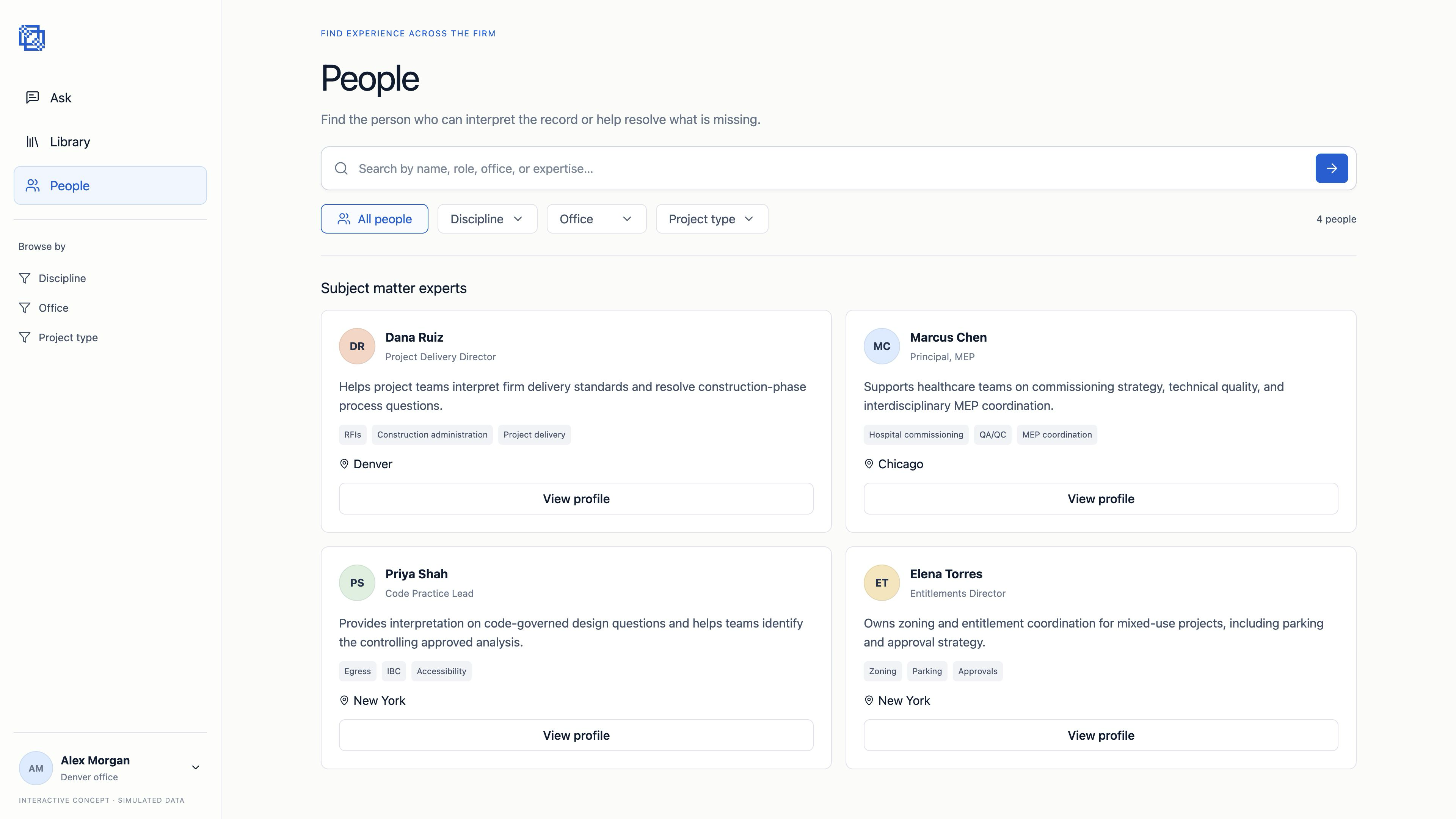
The hard problem was making approved firm knowledge easier to use without hiding where an answer came from or who owns it.
Keystone keeps scope, currentness, evidence, and absence visible. Staff add interpretation and escalation, but the approved record remains the source of truth.
- 01Set scopeFirm or project knowledge remains visible
- 02RetrieveCurrent approved sources are eligible
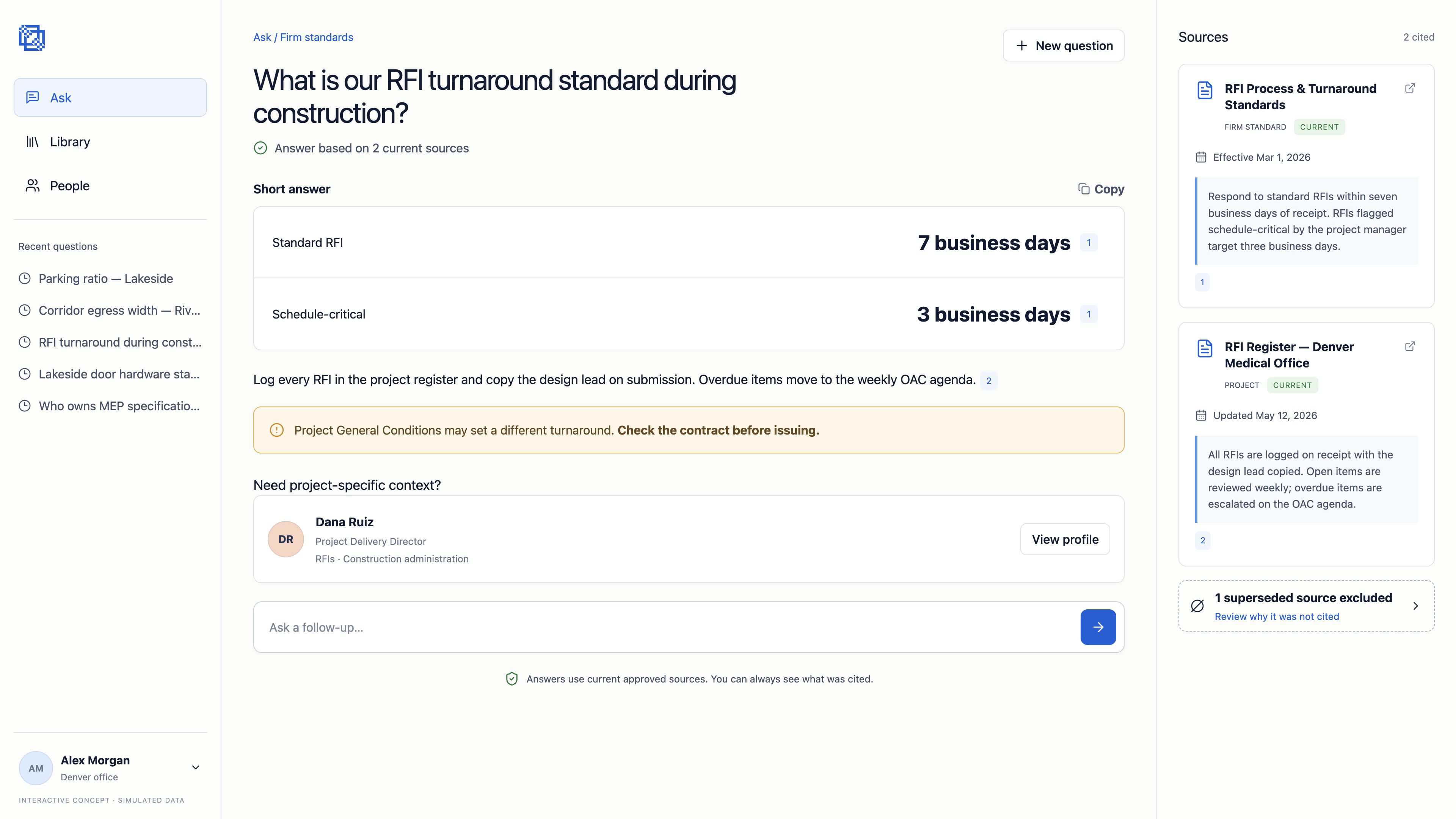
- 03AnswerThe shortest supported response comes first
- 04InspectCitations, owners, and excluded sources stay available
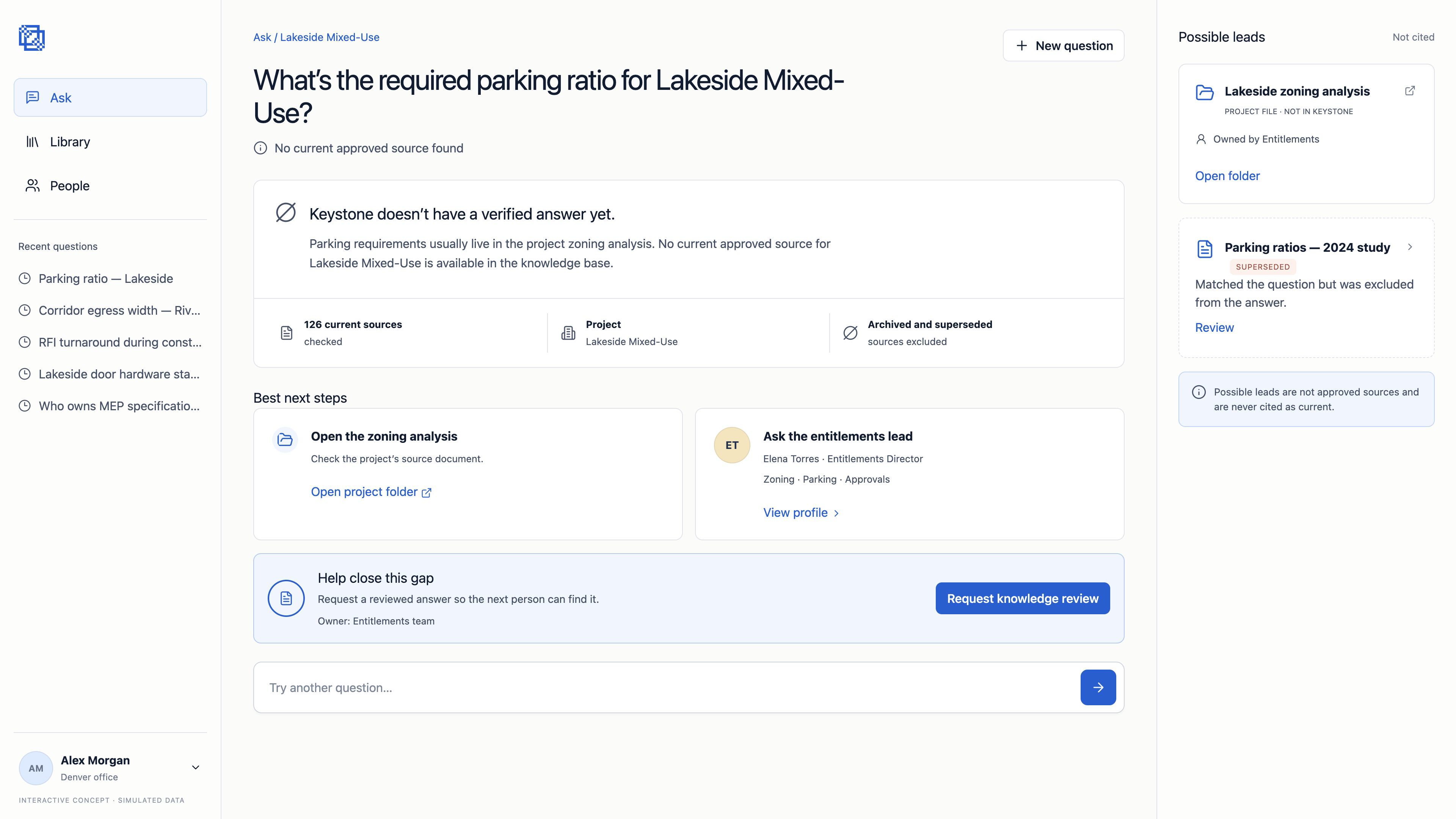
- 05Own gapsMissing knowledge becomes a review request
Key product decisions
Three choices define how the product earns trust without pretending the prototype is connected to a live firm knowledgebase.
- 01
Approved sources carry authority
ChoiceOnly current approved records can support an answer. Superseded material remains visible but is excluded from current guidance.
WhyTrust depends on distinguishing the record a team can rely on from material that only explains prior context.
- 02
Evidence travels with the answer
ChoiceEvery answer keeps citations, ownership, scope, and effective dates close enough to inspect without leaving the task.
WhyA concise answer is useful only when a person can quickly verify what supports it and who owns the record.
- 03
Absence becomes an owned action
ChoiceWhen no approved answer exists, Keystone says so and offers possible leads or a knowledge-review request.
WhyA clear gap with an owner is safer and more useful than a fluent answer built from weak or outdated material.