
Evidence-backed proposal review
RFP Extract
- Role
- Self-directed. Product direction, experience design, and prototype build.
- Description
- Reframing proposal generation as a review system with evidence, ownership, and clear product boundaries.
- Audience
- Proposal, operations, and leadership teams
- Stage
- Working prototype. The interface, review flow, and pricing rules run in the app. SharePoint sync, AI extraction, and document generation are simulated, pending engineering validation.
System reframe
The product was not a faster way to fill out Word docs.
The real product question was how to move a proposal workflow from document handling into a controlled opportunity record without removing human judgment.
AI proposes values with evidence. People approve the record. Rules calculate. Deterministic software handles final transfer.
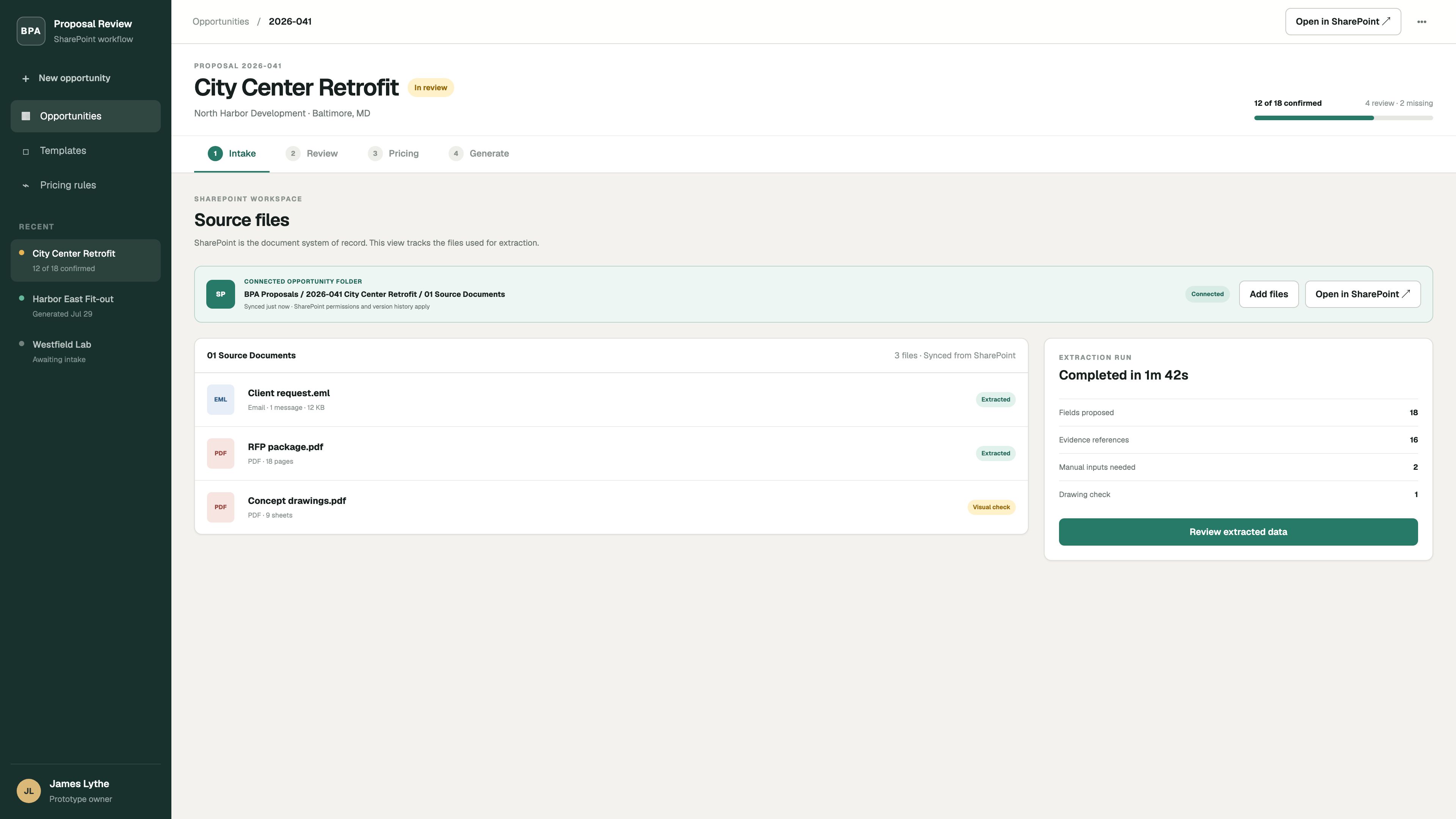
- 01Source documentsSharePoint remains the system of record
- 02AI proposesValues, summaries, citations, and confidence
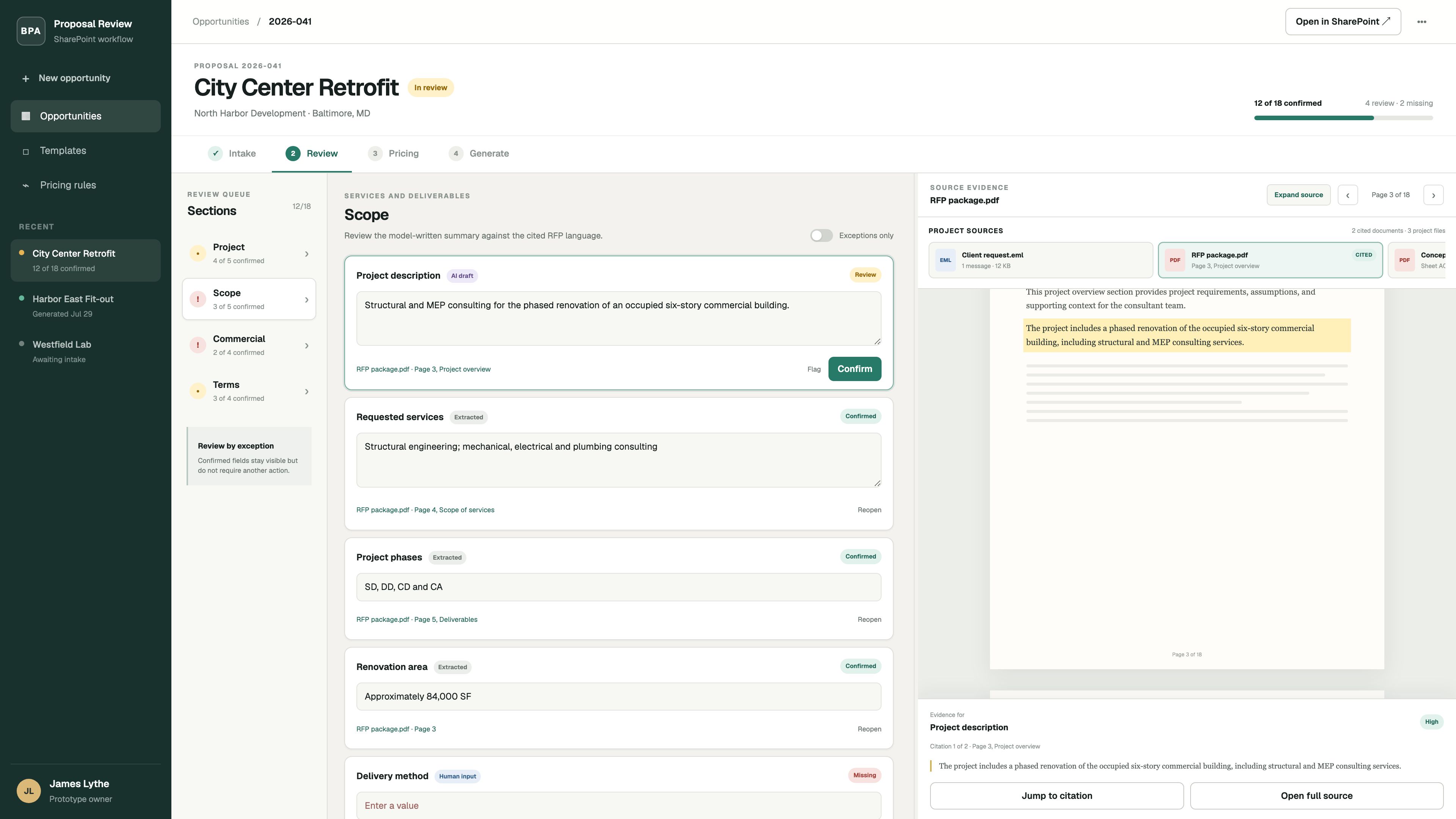
- 03Human verifiesConfirm, edit, flag, or request input
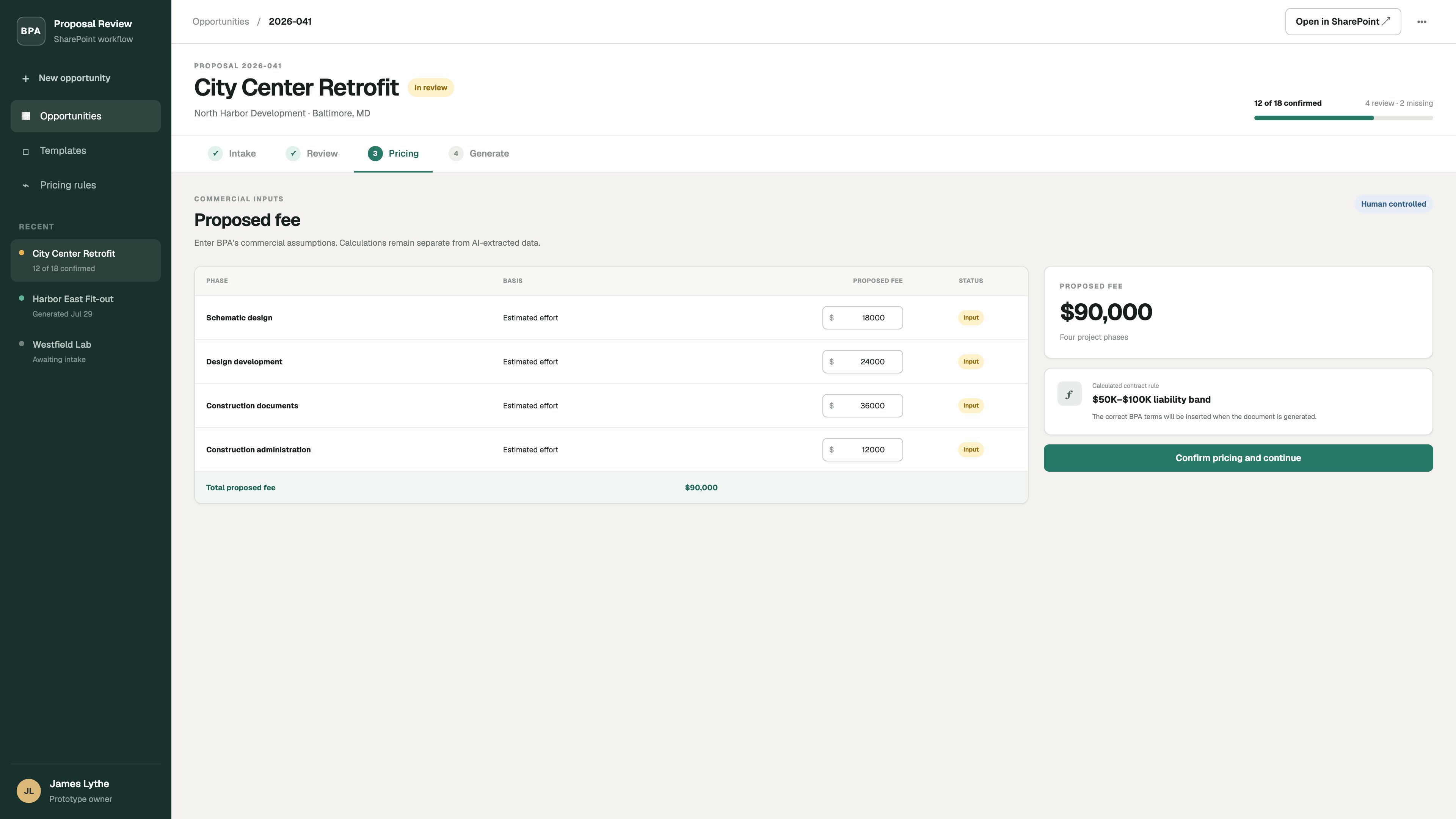
- 04Rules calculatePricing, validation, and readiness checks
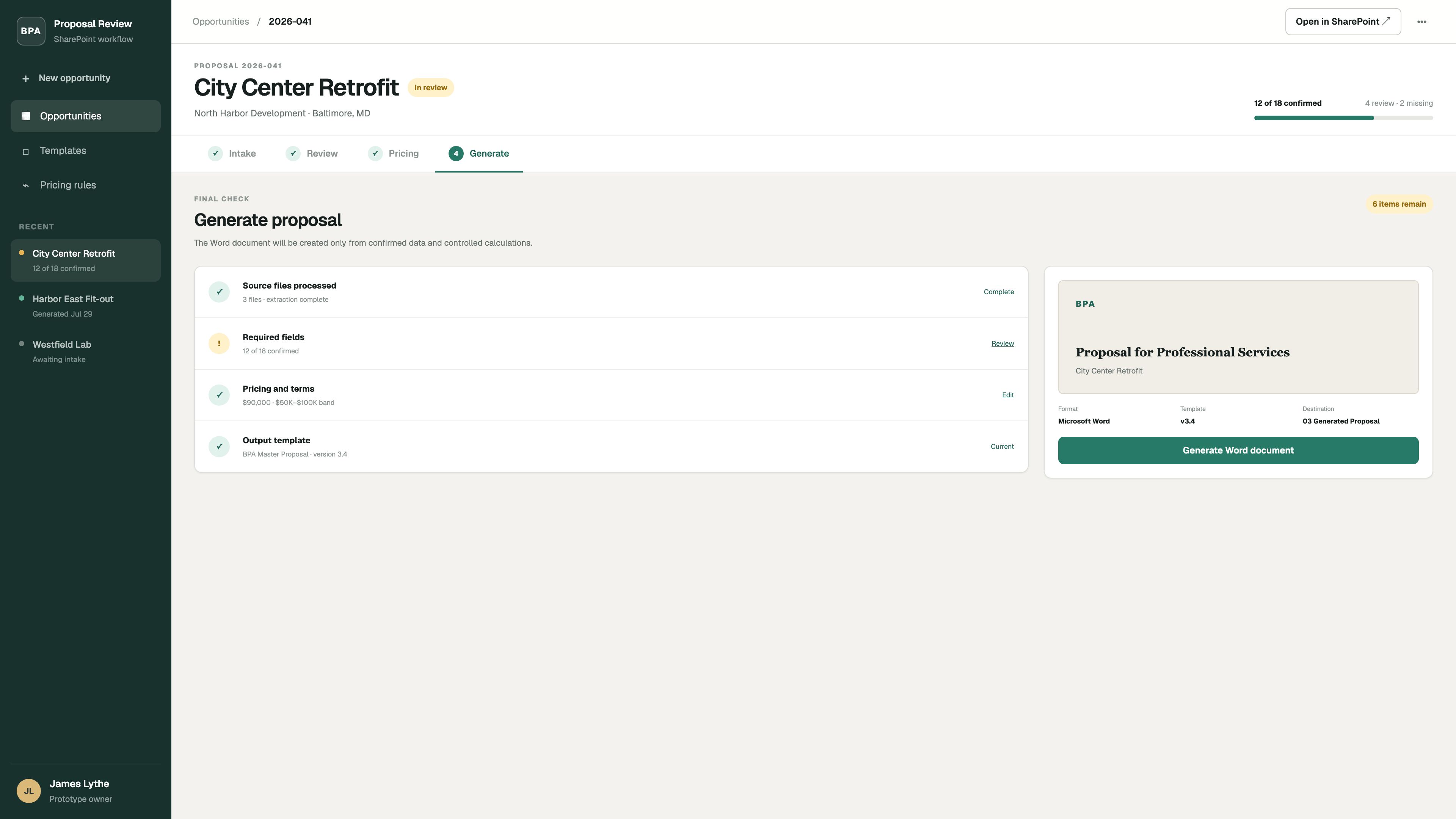
- 05Software generatesApproved values map into Word and PDF
Key product decisions
Three choices define the trust model and the implementation boundary.
- 01
Structured data before documents
ChoiceThe opportunity record becomes the source of truth. Word and PDF become outputs.
WhyKeeping Word as the working database preserves manual selection, repeated verification, and formatting risk.
- 02
Human approval before generation
ChoiceEvery proposed value stays reviewable beside its source evidence before it can move downstream.
WhyA high-confidence extraction is still a proposal. A reviewer owns the approved interpretation.
- 03
Deterministic final insertion
ChoiceApproved values map to stable template fields through software, not a second model pass.
WhyThe system should not reinterpret information after a human has already approved it.